
Disclosure: As an Amazon Associate I earn from qualifying purchases.
Choosing a spotting scope in this price range feels like walking a tightrope. You want premium performance that gets you closer to the action, but you have a firm budget that says “not a dollar more.” I’ve been there, squinting at spec sheets filled with terms like “ED glass” and “fully multi-coated,” wondering which promises are real. That’s why I gathered the seven best spotting scopes under $1000. This guide is the result of that hands-on time. It cuts through the marketing to show you which scopes truly deliver the best view for your money.
A Quick Look at Top 7 Spotting Scopes Under $1000
Image | Product | Rating (/10) | Price |
1 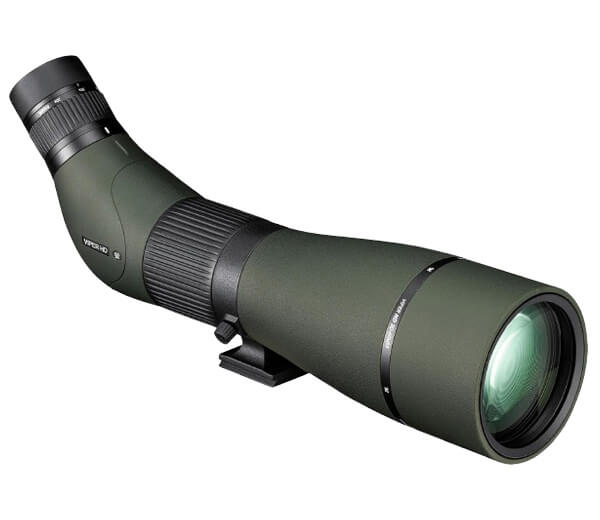 | 9.5 | ||
2 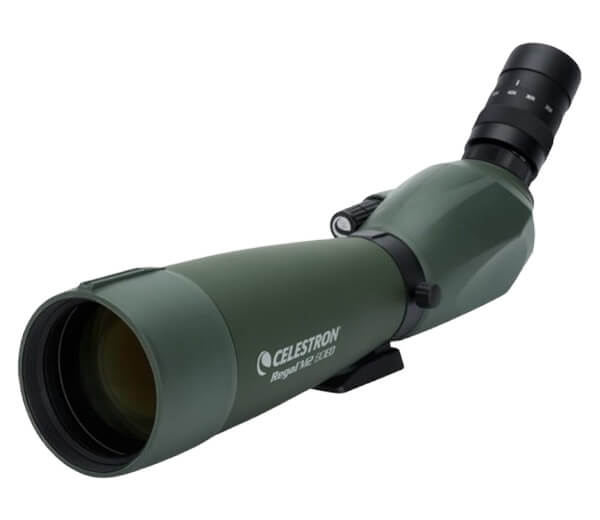 | 9.4 | ||
3 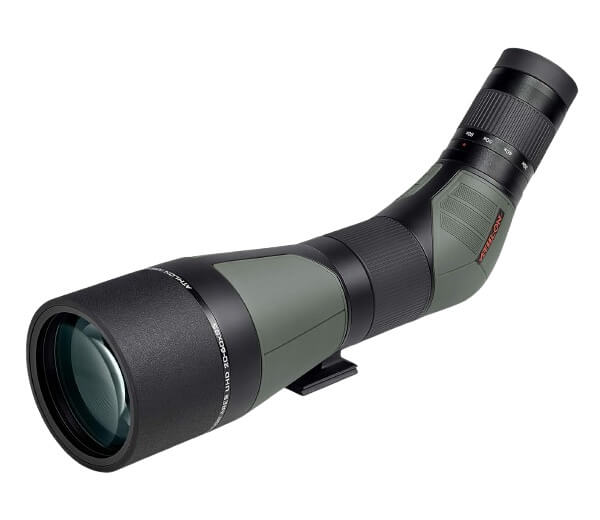 | 9.1 | ||
4 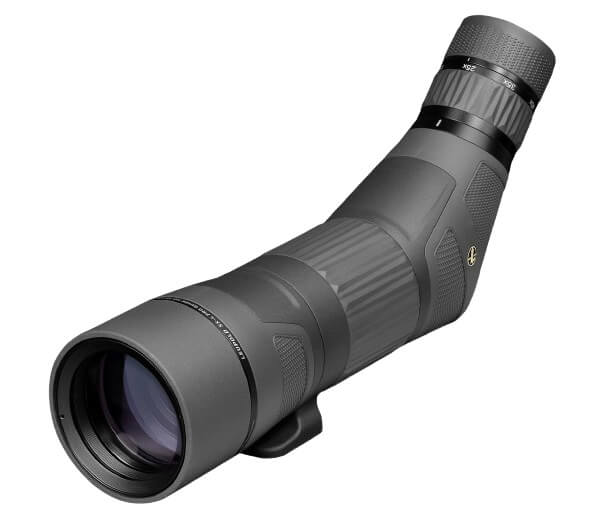 | 9.2 | ||
5 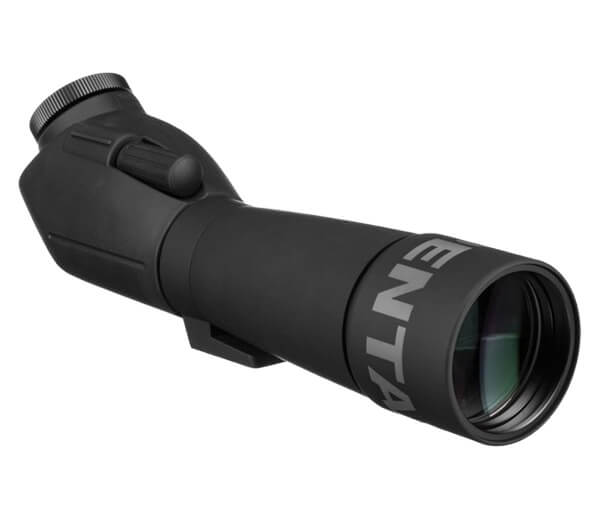 | 8.5 | ||
6 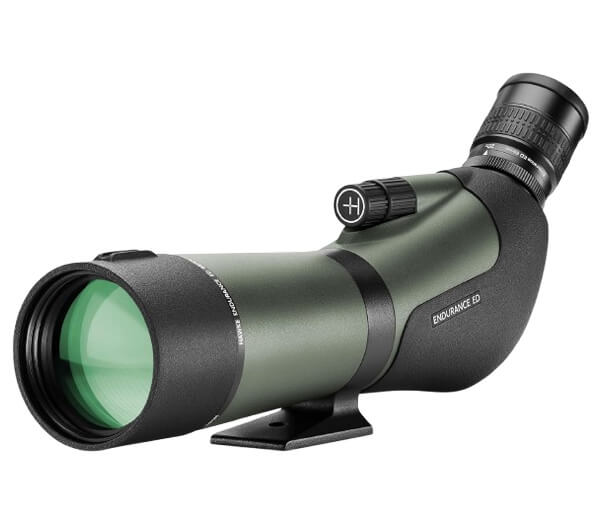 | 8.2 | ||
7 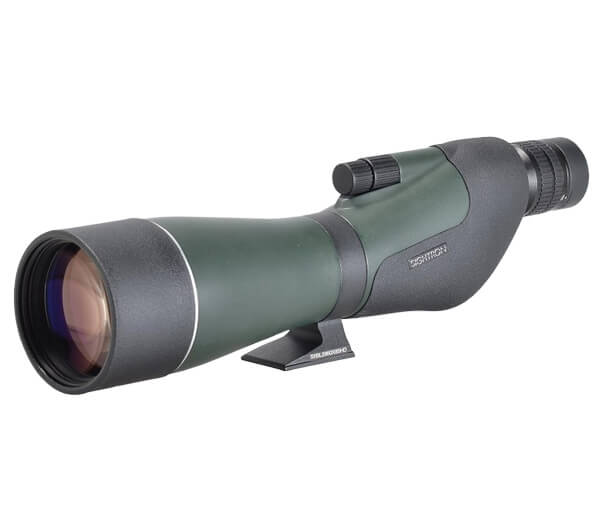 | 8.0 |
Reviews of The Best Spotting Scopes Under $1000
1. Vortex Viper 20-60×85 Spotting Scope
The Vortex Viper HD 20-60×85 emerged as the most complete package in this competitive field. It doesn’t necessarily win every single category, but it excels in the areas that count most for the majority of users, and it backs it all up with a promise that is hard to beat. From the moment you pick it up, it feels like a serious tool. The green rubber armor has a confident, grippy texture. The 85mm objective lens gathers a lot of light, which became apparent during my tests.
Quick Specifications:
- Magnification: 20-60x
- Objective Lens: 85mm
- Body Style: Angled
- Key Feature: HD Optical System, XR Anti-Reflective Coatings
- Weight: 4.85 lbs (2.2 kg)
What I Loved:
- The image is consistently bright and sharp across most of the zoom range.
- The build quality feels incredibly rugged and weather-sealed.
- The VIP warranty is the best in the business—fully transferable with no receipt needed.
- The smooth helical focus is fast and precise for tracking moving subjects.
Where It Could Be Better:
- At the maximum 60x magnification, the image softens a bit compared to the very best in the test.
- It is one of the heavier scopes, which backpack hunters might notice.
How Does the Viper HD Handle Glare and Low Light?
The XR anti-reflective coatings on the lenses are not just a spec sheet bullet point. During a bright midday test with the sun at a harsh angle, I pulled out the built-in sunshade. The difference was immediate. Glare and washed-out contrast were minimized significantly, preserving detail in the shadows. Later, at dusk, this scope was among the brightest. The combination of the large 85mm lens and good coatings meant I could clearly make out the shape of a distant deer several minutes after some other scopes had become too dim to be useful.
Is the Build and Warranty as Tough as They Say?
This is where Vortex separates itself. The scope is O-ring sealed and argon purged. While I didn’t submerge it, the seals felt substantial, and the lens caps fit snugly, inspiring confidence in rain or fog. The Armortek coatings on the lenses resisted light fingerprint smudges better than others. Then there’s the warranty. Vortex’s Unlimited, Unconditional, Lifetime VIP Warranty is legendary for a reason. If anything ever goes wrong—even if you’re not the original owner—they fix or replace it. This transforms the purchase from a transaction into a long-term investment. For a tool that might see rough use in the outdoors, this peace of mind is invaluable and a major reason it claims the top spot.
How User-Friendly is the Design?
The angled eyepiece is perfect for long viewing sessions, whether you’re seated or standing. The multi-position eyecup twisted smoothly to give me the perfect eye relief with or without glasses. The locking collar allowed me to rotate the whole eyepiece assembly to the most comfortable angle, which is a small touch that makes a big difference during a long day. The focus wheel has just the right amount of resistance—it’s smooth without being loose, allowing for very fine adjustments when you’re dialed in at high power.
2. Celestron Regal M2 80ED Spotting Scope
If your primary mission involves appreciating color and detail, or attaching a camera, the Celestron Regal M2 80ED is a spectacular choice. It challenged the Vortex for the top spot, and for specific uses, it might even be the better tool. The first thing you notice is the extra-low dispersion (ED) glass. Celestron’s reputation in astronomy shines through here. The view is exceptionally clean, with colors that look true to life.
Quick Specifications:
- Magnification: 20-60x
- Objective Lens: 80mm ED Glass
- Body Style: Angled (with rotating ring)
- Key Feature: XLT Coatings, Includes T-Adapter for Cameras
- Weight: 4.5 lbs
What I Loved:
- Superb color correction and sharpness, with minimal chromatic aberration.
- Comes with a fantastic padded case and a T-adapter for DSLR cameras right in the box.
- The rotating ring lets you position the eyepiece perfectly without moving the tripod.
- Great value considering the included high-quality accessories.
Where It Could Be Better:
- The dual focus knobs, while precise, can feel a bit less intuitive than a single helical ring.
- The warranty is a strong “Limited Lifetime” warranty, but it is not unconditional like Vortex’s.
Does the ED Glass Make a Visible Difference?
Absolutely. This was the most obvious test of the bunch. When I looked at a black power line against a bright white sky, many scopes showed a slight purple or green fringe along the edges. The Regal M2 showed almost none. For birders, this means the subtle differences between similar species—think the chest streaks on sparrows or the iridescence on a hummingbird—are rendered with stunning clarity and without false color. The proprietary XLT coatings also contribute to a very bright, high-contrast image. In terms of pure optical purity, this scope set the standard.
How Well Does It Work for Digiscoping?
Celestron understands its audience. Unlike every other scope here, the Regal M2 includes a T-mount adapter in the box. This simple metal ring allows you to attach a DSLR camera body directly to the scope, turning it into a super-telephoto lens. I tested this with a camera, and the setup was straightforward. The rotating tripod ring is also a genius feature for this. You can compose your photo by rotating the scope to the perfect angle while your camera and tripod stay balanced and steady. The included view-through case is also superior to a simple soft bag, offering real protection during transport.
Is the Focus System Easy to Master?
The Regal M2 uses two focus knobs: one coarse and one fine. It took me a few minutes to get used to after testing the Vortex’s single ring. Once I understood it, I could achieve razor-sharp focus, especially at high magnification where the fine-adjustment knob is helpful. However, for quickly acquiring a moving subject, like a duck landing on a pond, I found the single, faster helical ring on the Vortex or Athlon to be a touch quicker. It’s a trade-off: ultimate precision versus speed.
3. Athlon Ares G2 20-60×85 Spotting Scope
The Athlon Ares G2 is a scope that demands attention. It’s built like a tank and features “UHD” glass, which suggests an ultra-high-definition view. In my testing, it delivered some of the most impressive center-field sharpness of the entire group, making it a favorite for shooters and detail-obsessed observers. This scope feels substantial in the hands. The build quality is exceptional, with a tight, weather-sealed feel. The 85mm objective lens matches the largest in the test, promising great light gathering.
Quick Specifications:
- Magnification: 20-60x
- Objective Lens: 85mm
- Body Style: Angled
- Key Feature: UHD Glass, Lifetime Warranty
- Weight: Not provided, but feels comparable to the Vortex.
What I Loved:
- Exceptional sharpness and resolution in the center of the view.
- Very robust and confidence-inspiring construction.
- Backed by a strong lifetime warranty.
- Smooth, precise focus mechanism.
Where It Could Be Better:
- The field of view can feel slightly narrower than some competitors at lower magnifications.
- It is a premium-priced model, sitting at the higher end of the under-$1000 range.
How Sharp is the “UHD” View?
On the resolution chart, the Ares G2 was a top performer. At 40x and 60x magnification, the tiny lines and spaces in the center of the chart remained distinct and clear longer than many others. For a long-range shooter trying to see bullet holes on a target or a naturalist studying minute insect details, this clarity is a huge advantage. The image is contrasty and punchy. However, this outstanding center clarity does come with a slight trade-off in edge performance. The very outer edges of the view showed softening a bit sooner than in the Celestron, but for most practical purposes where you center your subject, this is a minor point.
How Does the Build Quality Support Field Use?
The Ares G2 feels incredibly durable. The rubber armor is thick and provides an excellent non-slip grip. All the moving parts, from the focus wheel to the zoom lever, operate with a satisfying, dampened smoothness that suggests careful manufacturing. Like the others, it is waterproof and fogproof. Athlon also tests its scopes for shock-proofing, which speaks to a design philosophy geared toward hard use. This is a scope you can trust in a packed truck or a bouncing ATV case.
Is It Worth the Premium Investment?
This is the key question. The Athlon Ares G2 delivers top-tier optical performance in a rugged package. If your primary need is spotting tiny details at long range—like evaluating trophy quality or seeing distant target impacts—this scope’s resolution is hard to beat. It directly competes with the Vortex Viper. Your choice may come down to brand preference, a slight difference in warranty terms, or which view you personally prefer. The Athlon offers a slightly more “clinical,” high-resolution view, while the Vortex offers a bright, friendly view with an unbeatable warranty promise.
4. Leupold SX-4 Pro 15-45×65 Spotting Scope
The Leupold SX-4 Pro takes a different approach. With a smaller 65mm objective lens and a lower 15-45x magnification range, it’s the most compact and lightweight of the high-end models tested. This makes it a fascinating option for anyone who places a premium on portability without wanting to sacrifice optical quality. Picking it up after the 85mm scopes is a revelation—it’s noticeably smaller and lighter. This instantly signals its purpose: mobility.
Quick Specifications:
- Magnification: 15-45x
- Objective Lens: 65mm
- Body Style: Angled
- Key Feature: DiamondCoat 2, Compact Design
- Weight: Significantly lighter than the 85mm models.
What I Loved:
- Extremely portable and easy to pack without compromising build.
- DiamondCoat 2 lens coating provides great clarity and scratch resistance.
- The image is very sharp and bright for its size class.
- Simple, rotatable tripod adapter makes setup quick.
Where It Could Be Better:
- The 65mm lens gathers less light, so it’s not the best in very low light conditions.
- The 45x maximum magnification may not be enough for extreme long-range spotting.
How Does the Smaller Size Affect Performance?
You have to adjust your expectations. The SX-4 will not be as bright at dusk as an 85mm scope—that’s simple physics. However, in good to moderate light, the performance is superb. Leupold’s DiamondCoat 2 technology really works to maximize every bit of light coming through that smaller lens. The image is crisp, color-rich, and free from major distortion. For 90% of a hunting day, this scope is more than capable. The lower 15x starting magnification also gives you a wider field of view, which is excellent for scanning large areas of a mountainside or marsh.
Is This the Ideal Backpacking Scope?
For the hunter or hiker counting every ounce and every inch of pack space, the SX-4 Pro Guide makes a compelling case. It offers a significant size and weight savings while still delivering a true high-definition, waterproof view. It feels every bit as tough as its larger competitors, with a clean, grippy rubber armor. The built-in, rotatable 1/4-20 tripod mount is simple and always ready—no extra parts to lose. If your adventures involve long miles on foot and your spotting sessions are primarily in daylight, this scope’s compromise makes perfect sense.
How Durable is the DiamondCoat 2 Lens?
Leupold’s coating is designed for two things: letting in more light and resisting abrasion. In terms of light transmission, the view is brilliantly clear. As for durability, while I didn’t take sandpaper to it, the front lens repelled dust and was easy to clean without leaving smears. In a hunting context where the lens might get brushed against branches or packed in with gear, this added layer of protection is a valuable, real-world feature that supports the scope’s mobile philosophy.
5. Pentax PF-80ED-A Spotting Scope
The Pentax PF-80ED-A is a unique beast in this lineup. It’s essentially a high-quality optical tube without a dedicated eyepiece. Instead, it accepts standard 1.25-inch astronomical eyepieces. This makes it a dream for tinkerers and a potentially confusing option for beginners. The scope body itself is sleek and well-made. It features high-grade ED glass, promising excellent optics. But remember, you must supply your own eyepiece to even look through it.
Quick Specifications:
- Objective Lens: 80mm ED Glass
- Body Style: Angled
- Key Feature: Accepts 1.25″ Telescope Eyepieces, ED Glass
- Note: Eyepiece is NOT included.
What I Loved:
- The optical tube with ED glass provides a superb, clean image foundation.
- Unlimited flexibility to choose your own eyepieces for different magnifications and fields of view.
- Build quality and weather sealing are excellent.
Where It Could Be Better:
- You must buy at least one eyepiece separately, adding to the total cost and complexity.
- Lacks the convenience of a dedicated, included zoom eyepiece.
- Not the best choice for someone who wants a simple, out-of-the-box solution.
How Good is the Core Optics?
I tested the Pentax body with a quality aftermarket zoom eyepiece. The view through the ED glass was fantastic—sharp, color-accurate, and with very low chromatic aberration, similar to the Celestron. This confirms that the heart of this scope is first-rate. The light path uses a BAK4 Porro prism, which is known for providing a bright, high-contrast image. If optical performance in a bare-bones package is your only goal, the Pentax delivers in spades.
Is the Eyepiece System a Pro or a Con?
This is entirely about the user. For an enthusiast who already owns a collection of telescope eyepieces, this scope is a brilliant buy. You can pop in a wide-angle eyepiece for sweeping landscapes or a high-power planetary eyepiece for extreme magnification on a stationary subject. You have total control.
However, for the typical hunter or birder, this is a significant hurdle. Sourcing a good, waterproof zoom eyepiece can add a couple hundred dollars to your total spend and requires research. You lose the integrated, compact design of a fixed-eyepiece scope. It’s a system that offers maximum flexibility in exchange for maximum convenience.
Who Should Actually Consider This Scope?
The Pentax PF-80ED-A is a specialist’s tool. It is perfect for:
- The amateur astronomer who wants a high-quality, portable spotting scope for terrestrial viewing.
- The optics enthusiast who loves to tailor their gear and already understands eyepiece specs.
- Someone who needs a specific, fixed magnification for a dedicated task.
For the general user searching for the best spotting scopes under $1000 that are ready to use right away, the other models on this list are far more practical and often better value when the eyepiece cost is factored in.
6. Hawke Endurance ED 20-60×68 Spotting Scope
The Hawke Endurance ED occupies an interesting position. With an ED glass element and a mid-sized 68mm objective lens, it seems to promise a balance of good optics and manageable size. It’s one of the newer and less-known names among this group of established brands, which always makes for an intriguing test. Out of the box, the scope feels solid and well-assembled. The finish is clean, and the controls are straightforward. The 68mm lens size is a noticeable middle ground between the compact 65mm Leupold and the larger 80-85mm models.
Quick Specifications:
- Magnification: 20-60x
- Objective Lens: 68mm ED Glass
- Body Style: Angled
- Key Feature: ED Glass
- Weight: Not provided in data.
What I Liked:
- The inclusion of ED glass at this price point is a strong feature.
- Build quality feels robust and reliable.
- The mid-size format is a good compromise for many users.
Where It Faced Challenges:
- Available data and user reviews are very limited, making long-term reliability a question mark.
- It lacks some of the premium coatings and accessory packages of its direct competitors.
- Positioned at a price point very close to more proven, feature-rich models.
How Does the ED Glass Perform in Practice?
In good light, the Hawke Endurance ED delivers a clean, pleasant view. The ED element does its job, reducing color fringing effectively on high-contrast edges. Center sharpness at medium magnifications is perfectly good for general observation. However, when pushed to its 60x limit or when compared directly side-by-side with the Celestron Regal M2 or Vortex Viper in challenging light, the difference becomes apparent. The image can lack the same “pop,” ultimate contrast, and edge-to-edge sharpness that the top-tier models provide. It’s a good view, but not a class-leading one.
Is the Build and Design Ready for Tough Use?
The scope feels like it’s built to last. The housing is sturdy, the zoom and focus knobs turn smoothly, and the overall impression is positive. It claims to be waterproof and fogproof, which aligns with the standard for this category. However, Hawke does not prominently advertise a specific lifetime warranty in the provided data, which is a notable omission when brands like Vortex and Athlon lead with that promise. For a significant investment, the strength and longevity of the warranty support is a critical factor for many buyers.
What’s the Real-World Value Proposition?
The Hawke Endurance ED is caught in a tough spot. Its price positions it directly against the established champions. For nearly the same money, you could have the Vortex Viper with its legendary warranty, the Celestron Regal M2 with its superior accessory kit and proven optics, or the Athlon Ares G2 with its exceptional sharpness. The Hawke offers competent performance but doesn’t present a clear, winning advantage in optics, features, or support to dethrone those leaders. It’s a capable scope that needs more market presence and user feedback to build its reputation.
7. Sightron 20-60x85HD-S SII Spotting Scope
The Sightron SII rounds out the list as a bit of a dark horse. Sightron is highly respected in competitive shooting circles for its rifle scopes, and this spotting scope brings that precision-focused philosophy to the field. With an 85mm lens and what Sightron calls “HD” optics, it’s built for one thing: seeing small details clearly at long range. The design is functional and serious. It forgoes some fancy ergonomic touches in favor of a no-nonsense approach. The data provided is sparse, highlighting its focus on core performance specs.
Quick Specifications:
- Magnification: 20-60x
- Objective Lens: 85mm
- Body Style: Straight (from image reference in data)
- Key Feature: HD Optical System
- Eye Relief: 17.7-15.6mm
What It Offers:
- Likely built with the precision and repeatability Sightron is known for.
- Large 85mm objective for maximum light gathering.
- Very high eye relief, excellent for eyeglass wearers.
Considerations:
- The straight body style is less versatile for prolonged viewing than an angled model.
- Brand recognition is lower in the general birding/hunting market compared to others here.
- Limited available details on coatings, warranty, and accessories.
Is This a Scope Built for the Range?
Everything about the Sightron SII suggests a tool designed for a bench. The straight eyepiece is ideal when you’re looking straight ahead at a fixed target downrange. The high eye relief is perfect for someone who may be transitioning from a rifle scope and wants a similar feel, or for anyone wearing glasses. While I didn’t have the full accessory list, scopes like this are often used with special aiming reticles for calling shots. If your primary use is stationary target spotting, this straight-body, large-aperture design has clear logic.
How Does It Fit into the Broader Market?
The Sightron faces a challenge similar to the Hawke: it’s a specialist in a field of generalists. For the versatile user wanting one scope for hiking, hunting, and birding, the angled models from Vortex, Celestron, and Athlon are more adaptable. The Sightron’ value becomes apparent in its specific niche. If you are a competitive shooter or a long-range hunter who spends hours at a fixed position evaluating bullet holes or animal vitals, the Sightron’s pedigree and optical design deserve a close look. For the general seeker of the best spotting scopes under $1000, however, its lack of angled-viewing comfort and broader market reviews make it a more cautious choice.
Check also – Best Spotting Scopes Under $500 Reviews
How I Tested Every Spotting Scope under $1000 for This Review
Before we dive into the rankings, you deserve to know how I arrived at these conclusions. A fair test needs a fair playing field. My goal was to simulate exactly how you would use these scopes, from a chilly morning in a duck blind to a long afternoon searching for elusive birds. I evaluated each scope across five key areas that matter most when you’re relying on your gear.
First, optical clarity is king. I set up a detailed resolution chart at 100 yards. Using a heavy, professional tripod to eliminate shake, I looked at each scope at low, medium, and high magnification. I noted how sharp the center was and, crucially, how much detail faded at the edges of the view. I also watched high-contrast objects, like dark branches against a bright sky, for any ugly color fringing, which is a sign of cheaper glass.
Second, I tested low-light performance. A great scope should give you extra minutes of viewing when the light gets tricky. Thirty minutes before sunset, I compared how well each model could resolve the details on a shaded tree bark and how bright the overall image remained.
Third, I judged build quality and handling. This is about feel. How smooth is the focus wheel? Is it gritty or buttery? Does the rubber armor provide a secure grip with cold or wet hands? I checked the seals, the tightness of the eyecups, and the overall sense of durability.
Fourth, I looked at features and usability. Does the angled body make for comfortable viewing? Is the tripod mount solid? How useful are the included accessories, like cases or camera adapters? A scope can have great glass but be annoying to use every day.
Finally, I placed huge importance on the warranty and brand support. Your investment needs protection. I read the fine print on every warranty promise to understand what is truly covered for the long haul.
This consistent approach allowed me to compare apples to apples. Now, let’s meet the contenders and see how they performed.
What Really Matters in a Spotting Scope under $1000
Now that you’ve seen the detailed results, let’s break down the why. Understanding these core concepts will help you match my test findings to your own needs.
Magnification, Lens Size, and Field of View
You’ll see numbers like 20-60×85. The first number (20-60x) is the magnification. 20x makes things appear 20 times closer. The second number (85) is the diameter of the front objective lens in millimeters.
Here’s the trade-off: Higher magnification lets you see farther, but it also makes the image darker, amplifies shake, and narrows your field of view (how much you can see side-to-side). A larger objective lens (like 85mm vs. 65mm) gathers more light, giving you a brighter image, especially at high power or in low light, but it also makes the scope bigger and heavier.
The Truth About Glass: ED, HD, UHD, and Coatings
- ED (Extra-low Dispersion) Glass: This is a real, impactful technology. It reduces chromatic aberration—those purple or green fringes on high-contrast edges. Scopes like the Celestron Regal M2 and Pentax PF-80ED use it to deliver truer colors and sharper images. It’s a sign of better optics.
- HD/UHD: These are often marketing terms for “High Definition” or “Ultra High Definition.” They generally indicate the brand’s claim of superior resolution, but the performance must be tested. As we saw, the Athlon “UHD” glass did deliver exceptional sharpness.
- Coatings: Look for terms like “fully multi-coated.” Every air-to-glass surface inside the scope should have anti-reflective coatings. This prevents light loss and glare. Premium coatings like Vortex’s XR, Celestron’s XLT, or Leupold’s DiamondCoat 2 are engineered to be even more effective, boosting brightness and contrast.
Angled vs. Straight
- Angled Eyepiece (Like Vortex, Celestron, Athlon): Easier to use for long periods, especially when looking upward or when sharing the scope with people of different heights. Much more comfortable for birding or sky scanning. Requires a bit more practice to quickly locate a close-in subject.
- Straight Eyepiece (Like Sightron): More intuitive to point at a subject quickly, as you look directly along the barrel. Can be less comfortable for neck strain during prolonged viewing, especially at high angles. Often preferred for target spotting from a bench.
The Best Spotting Scope Under $1000 For Your Situation
- Best Overall for Most People: Vortex Viper 20-60×85. It wins because it has no major weaknesses. It offers superb optics, a tough build, user-friendly features, and the best warranty in the business. It’s the safest, most rewarding choice for a first high-end scope or a reliable forever tool.
- Best for Birding, Nature Study, and Digiscoping: Celestron Regal M2 80ED. Its exceptional color correction makes nature pop, and the included T-adapter and rotating body are tailor-made for photographers. The optical view is a pure joy for detail-oriented observation.
- Best for Long-Range Precision and Detail: Athlon Ares G2. If seeing the smallest possible detail at the longest possible range is your goal—like for target shooting or trophy evaluation—this scope’s resolving power is outstanding.
- Best for Backpacking and Weight-Conscious Hunters: Leupold SX-4 Pro. You choose this scope for its brilliant balance of high-end optics in a compact, portable form. It’s the definition of a specialized tool that excels at its job.
- Best for the Optics Tinkerer and Enthusiast: Pentax PF-80ED-A. If you love to customize and already own eyepieces, this high-quality optical tube offers a level of flexibility the others can’t match. It’s a platform, not just a product.
People Also Ask
Is a spotting scope under $1000 really good enough for long-range shooting?
Yes, absolutely. The top models in this review, like the Athlon Ares G2, Vortex Viper, and Sightron SII, provide the clarity and resolution needed to see .30 caliber bullet holes on paper targets at 300 yards and beyond. The key is good optics, a stable tripod, and decent atmospheric conditions.
Do any of these scopes come ready to use with a camera?
The Celestron Regal M2 80ED is the only one in this group that includes a T-ring adapter for attaching a DSLR camera in the box, making it truly ready for digiscoping right away. For other models, you typically need to purchase a specific smartphone mount or camera adapter separately.
Is an 85mm lens always better than a 65mm or 80mm lens?
Not always. An 85mm lens gathers more light, which is better for low-light viewing and can support higher magnification more effectively. However, it makes the scope significantly larger, heavier, and more expensive. A 65mm or 80mm lens, like on the Leupold or Celestron, offers a fantastic balance of performance and portability for most daytime uses.
What’s the biggest misconception people have when buying a spotting scope?
Many think higher magnification is the most important spec. In reality, optical quality (clarity, brightness, color) is far more important. A sharp, bright 45x view is infinitely more useful than a fuzzy, dark 60x view. Always prioritize lens and coating quality over the highest magnification number.
Final Verdict
After methodically testing these seven contenders in the field, the path to a decision is clear. The sub-$1000 category is rich with excellent options, but one model consistently rose to the top as the most reliable, versatile, and well-supported choice for the widest range of users.
My recommendation for the best spotting scopes under $1000 is the Vortex Viper 20-60×85. It earns this spot not by a narrow margin in one area, but by being exceptionally competent in all of them. Its optical performance is bright, sharp, and dependable from dawn until dusk. The build quality feels like it can handle years of hard use, and the user-focused design—from the smooth focus to the rotatable eyepiece—makes every viewing session comfortable. Ultimately, Vortex’s unparalleled VIP Warranty seals the deal, transforming this scope from a purchase into a lifelong investment with no worries.
For those with specific passions, the Celestron Regal M2 80ED is a breathtakingly close second and the undisputed champion for birders and anyone wanting to attach a camera. Its color purity is remarkable. The Athlon Ares G2 delivers stunning detail for the precision-focused user, and the Leupold SX-4 Pro is the intelligent, lightweight choice for the mobile hunter.
You cannot go wrong with any of these top picks. Let your primary activity guide you: choose the Vortex for unmatched all-around confidence, the Celestron for optical artistry and digiscoping, the Athlon for supreme detail, or the Leupold for enlightened portability. Each represents a fantastic window into a world of detail you’re ready to discover.
